



Updated Disaster Waste Management Guidelines now available
- Disaster waste management
February 24, 2026
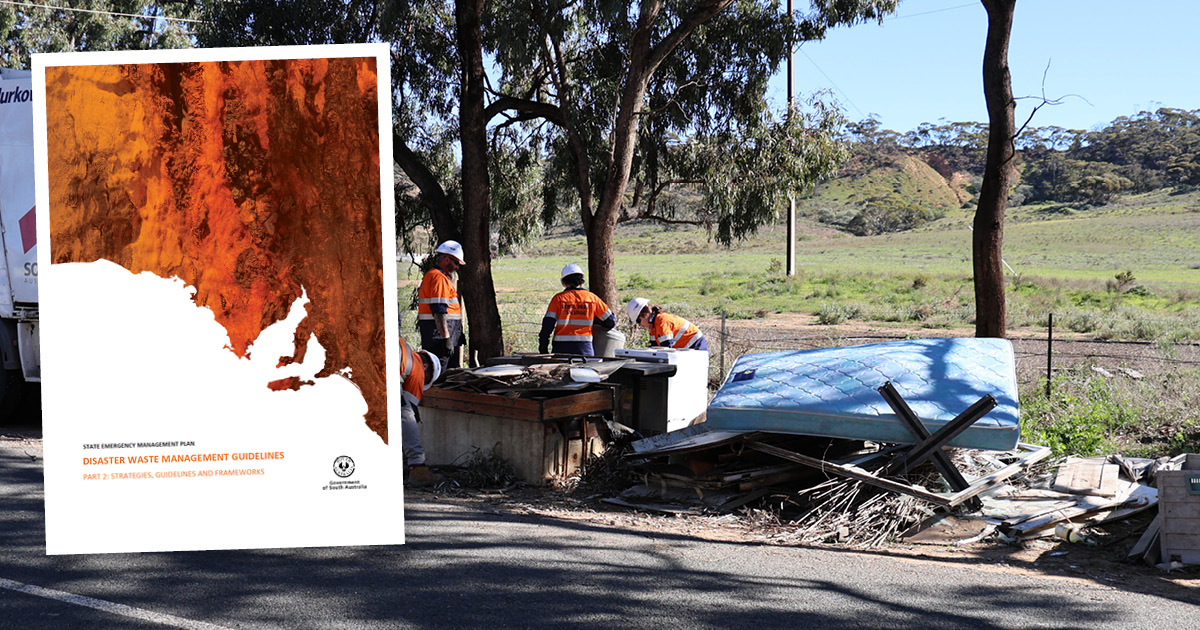
Green Industries SA (GISA) has recently released the updated Disaster Waste Management Guidelines. These guidelines are a key resource for preparing for, responding to, and recovering from waste issues caused by disaster events, and we encourage all stakeholders to familiarise themselves with the latest updates.
As climate change drives more frequent and intense weather related hazards – including floods and bushfires – communities face increasing challenges in managing the sudden surge of waste generated during disasters. Without effective planning, this waste can quickly overwhelm local systems, pose public health risks, and slow community recovery.
The updated guidelines provide practical, end to end advice for designing and implementing coordinated waste management programs following a disaster. They also offer technical guidance for handling high volume and hazardous waste streams typically encountered during clean up operations.
This revision incorporates lessons learned from GISA’s delivery of the River Murray flood clean-up program and extensive consultation with industry experts. New and expanded content includes:
- community communication
- program roles and responsibilities
- Aboriginal cultural heritage
- safe handling of lithium-ion batteries
- safe handling of respirable crystalline silica.
Importantly, the guidelines support not only response and recovery but also proactive disaster planning and preparedness. Councils, industry, and emergency management partners can use the guidelines to strengthen local and regional resilience.
With the current high risk bushfire period, GISA encourages stakeholders to review the guidelines and consider how disaster waste management is embedded within existing emergency and business continuity plans. This may include assessing available infrastructure, operational procedures, and stakeholder networks, and identifying opportunities to further strengthen them.
The full guidelines are available on the GISA website.